
Keeping a closet dry and mildew-free in New Orleans comes down to three things: airflow, clearance, and materials. Closets are small, enclosed, and often built against exterior walls, so humid air settles inside and stays there. Moving air through the space, leaving gaps behind and beneath what you store, and choosing surfaces that shed moisture rather than hold it will stop most mildew before it starts.
A closet is the easiest room in a New Orleans house to forget about until something in it smells wrong. By then the moisture has usually been sitting there for weeks.
The fix is rarely complicated, but it does need to happen in a sensible order. At Big Easy Kitchens, we rebuild closets across the metro area and the North Shore, and moisture is the single most common reason a client calls about one.
Here is how damp closets happen, what the warning signs mean, and how a rebuild designs the problem out. Contact us today to have a problem closet looked at before the next humid stretch.
Why Do New Orleans Closets Get Damp in the First Place?
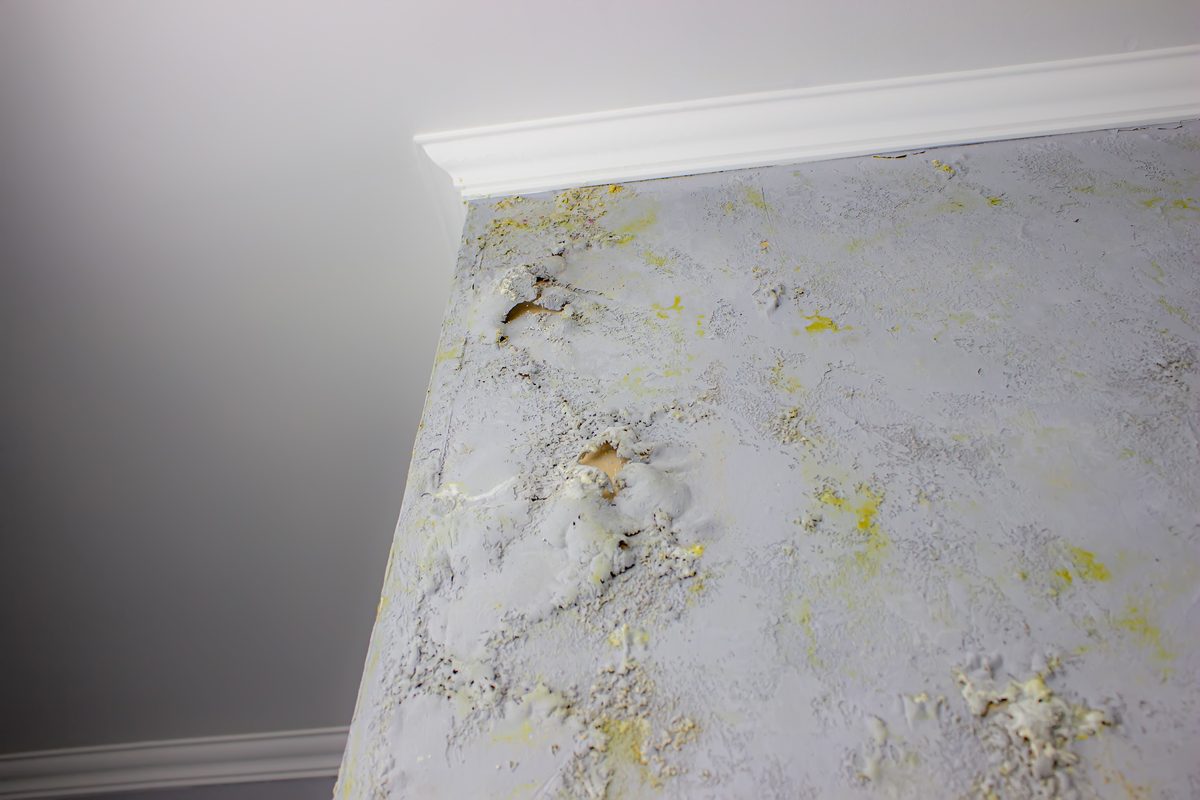
Mildew needs moisture and something organic to feed on, and the Environmental Protection Agency notes it will grow on virtually any organic material as long as moisture and oxygen are present. Still air is not a requirement for growth, but it is what lets that moisture sit long enough for growth to start.
Our air carries a heavy moisture load for most of the year. Every time a closet door opens, that air moves in, and when the door shuts it stays put with nowhere to go.
Placement makes it worse. A closet built against an exterior wall runs cooler than the rest of the room, and cooler surfaces are exactly where humid air gives up its moisture as condensation.
When Does Closet Moisture Become an Urgent Problem?
Some closet dampness is a housekeeping issue. Some of it is telling you water is getting in from somewhere, and that difference decides what you do next.
| What You Notice | What to Do Next |
|---|---|
| A faint musty smell that clears when the door stays open | Air it out and thin the contents so air can move between items. |
| Clothes feel slightly damp to the touch | Empty the closet, dry everything fully, and add airflow before refilling. |
| Small spots on a wall, shelf, or the back of a garment | Clean the surface, then find the moisture source before you restock. |
| Growth spreading across a wall or the closet ceiling | Stop and get a professional assessment. This is past a cleaning job. |
| A soft spot, staining, or bubbling on the closet wall | Treat it as a possible leak and have the wall assessed before any rebuild. |
| The smell returns within days of every airing out | Airflow alone is not solving it. The closet needs a design change. |
How Do You Dry Out a Closet That Is Already Damp?
Start by emptying it completely. You cannot assess a closet you cannot see the back of, and anything left inside keeps holding moisture while you work.
Then work through it in this order:
- Take everything out: clothes, boxes, shoes, and any shelf liner or organizer
- Dry the space: leave the door open and aim a fan into the closet, not past it
- Wipe the surfaces: clean walls and shelving, then let them dry fully before anything goes back
- Check the wall behind: look for staining, softness, or a cool patch that suggests a leak
- Dry the contents separately: anything that came out damp needs to be fully dry before it returns
Give the drying stage more time than feels necessary. Wood shelving and drywall hold moisture long after they feel dry to the hand, and refilling early puts the closet straight back where it started.
How Does a Closet Renovation Design the Moisture Out?
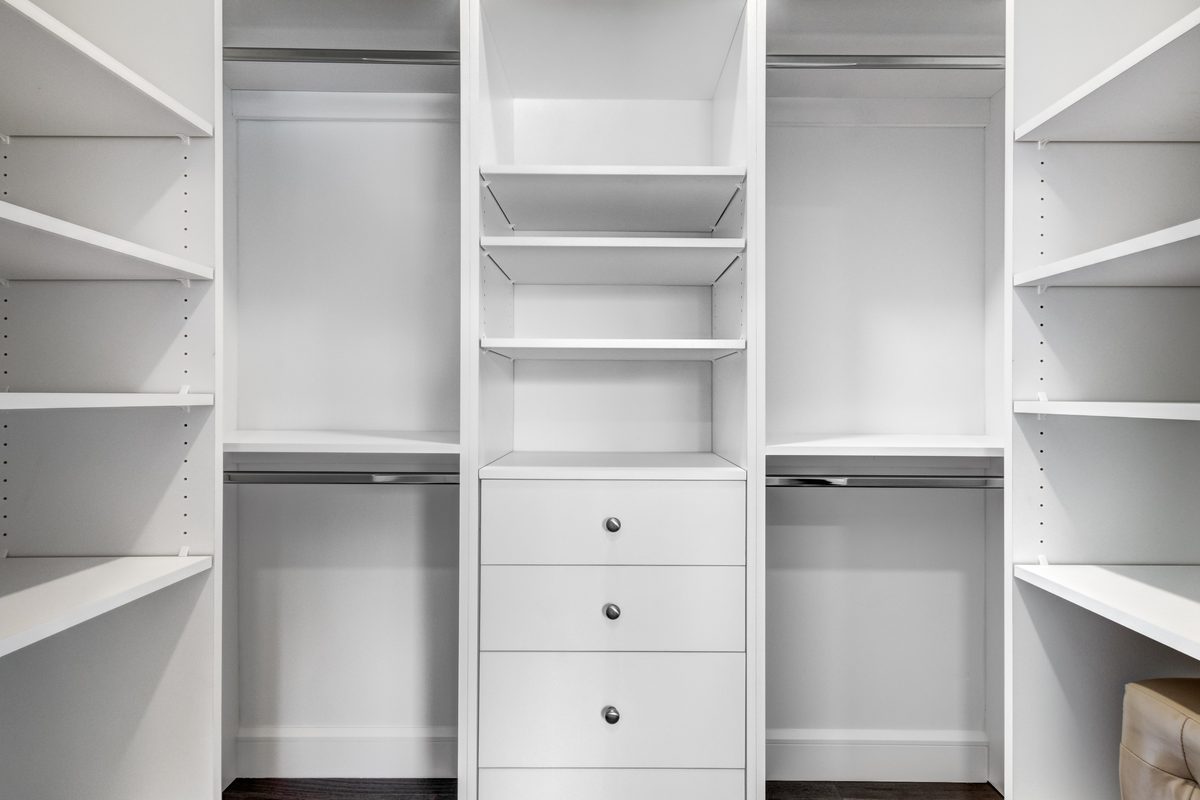
Airing out a closet treats the symptom. Rebuilding it changes the conditions that caused the problem, which is why chronically damp closets usually need more than a cleaning routine.
Ventilated Closet Shelving and Air Gaps
Solid shelves trap air in still layers. Ventilated shelving lets air pass vertically through the closet instead of pooling under each shelf.
The same logic applies to how the space gets used. Hanging rods spaced so garments do not touch keep air moving between them.
Our closet renovation work treats airflow as a layout decision rather than an accessory, because a closet packed wall to wall will trap moisture no matter what the shelves are made of.
Wall and Back-Panel Clearance
Storage pressed flat against an exterior wall blocks the air that would otherwise dry that surface. A small gap behind shelving and hanging space changes the behavior of the whole closet.
The floor matters just as much. Raising the lowest shelf off the floor keeps air moving underneath instead of trapping it against a cool floor.
Clearance is easy to build in and hard to add later. It is the detail most often lost when a closet gets maximized for capacity.
Moisture-Tolerant Closet Materials
Bare particleboard swells and stays swollen once it takes on water. Sealed plywood, coated wire, and finished surfaces shed moisture instead of drinking it.
Finishes matter as much as the substrate. An unsealed edge on an otherwise good shelf is where swelling starts.
Cedar deserves a note here. It repels certain insects and smells pleasant, but it does not lower humidity, so it is not a moisture control strategy on its own.
Doors, Lighting, and Airflow Paths
A fully sealed door looks tidy and traps air. Louvered doors, a vent panel, or an undercut at the bottom give the closet a path to exchange air with the room.
Lighting is a visibility and clearance decision rather than a moisture tool. The National Electrical Code sets minimum clearances between closet fixtures and the space where clothes are stored, so lighting gets planned around the shelving during design.
Where a closet backs onto a bathroom or an exterior wall, the airflow path deserves attention during design rather than after the shelving is in.
What Should You Check Before You Put Clothes Back?
Refilling too early undoes the work. A short checklist keeps the closet from resetting to its old condition.
- Everything is fully dry: walls, shelving, and contents, not just the surfaces you can reach
- The moisture source is identified: condensation, a leak, or simple lack of airflow
- Air can move: gaps at the back, under the bottom shelf, and between hanging items
- Nothing damp goes back in: damp shoes and gym bags restart the cycle on their own
- You have a way to monitor it: a small humidity gauge tells you more than a smell test
We rebuild closets across the North Shore and the metro area, and the homes where this holds up long term are the ones where the airflow path was designed in rather than added afterward.
Keep Your New Orleans Closets Dry Year-Round
A damp closet is a design problem more often than a cleaning problem, and treating it as the latter is why the smell keeps coming back. Airflow, clearance, and the right surfaces solve it in a way that a fan and a weekend cannot.
At Big Easy Kitchens, we look at the wall, the layout, and the airflow path together before recommending anything. Call us today to walk through a closet that keeps giving you trouble.
Frequently Asked Questions
Why does my closet smell musty?
A musty smell usually means moisture is sitting in still air on surfaces that never fully dry. Closets are enclosed, rarely ventilated, and often packed tight, so humid air moves in and stays. The smell is the first signal, well before anything is visible on a wall or a garment.
How do I stop mildew in my closet?
Give the space airflow, keep clothing and boxes off the walls and floor, and store nothing damp. Thin the contents so air can pass between items, leave a gap behind shelving, and use a louvered or undercut door so the closet can exchange air with the room.
Does a dehumidifier help in a closet?
Yes, a dehumidifier can lower moisture in a closet, and small units are made for enclosed spaces. It works best alongside airflow rather than instead of it, since a dehumidifier in a sealed, overpacked closet only reaches the air it can circulate through.
Should closet doors be left open?
Yes, especially in humid months. Leaving closet doors open lets humid air exchange with the room instead of sitting still, which is a habit worth keeping. A closet that needs its door open permanently is really telling you the airflow path needs a design fix.
What humidity level should I keep in the house?
The Environmental Protection Agency recommends keeping indoor relative humidity below 60 percent, and ideally between 30 and 50 percent, to limit mold and mildew growth. A household humidity gauge is the simplest way to know where you actually stand, and long humid stretches are when that reading matters most.
Does cedar prevent mildew?
No. Cedar is often chosen for closets because it repels certain insects and holds a pleasant scent, but it does not reduce humidity, so it will not keep a closet dry on its own. Cedar can be part of a closet build, just not the part doing the drying.
What do I do about mildew on clothes?
Take the affected garments out of the closet and follow the care label or a cleaner’s guidance for the fabric. The more important step is finding why the closet was damp, because returning cleaned clothing to unchanged conditions restarts the same cycle within weeks.
Are closets on exterior walls more likely to get damp?
Yes. A closet sharing a wall with the outdoors runs cooler than the rest of the room, and cool surfaces are where humid air releases moisture as condensation. Those closets benefit most from clearance behind shelving and a deliberate airflow path.