
Protecting kitchen cabinets from termites in New Orleans means catching the signs early and building the kitchen so damage is harder to hide. Termites reach cabinets through the wall and floor structure behind them, not across the countertop. Watch for hollow-sounding wood, blistered finishes, discarded wings near windows, and mud tubes inside the cabinet base, then route any confirmed activity to a licensed pest-control operator.
Cabinets are usually the last place a homeowner looks for termite damage and one of the first places it shows up. The wood is enclosed, rarely inspected, and sits against the wall structure that termites travel through.
That combination is why kitchen damage often gets found during a remodel rather than before one. At Big Easy Kitchens, we open cabinet runs across the metro area and the North Shore, and we see what the back panels have been hiding.
This is a guide to spotting the signs and to building a kitchen that resists the problem. Contact us today to have a cabinet run assessed if something about it has started to look wrong.
How Termites Reach Kitchen Cabinets in a New Orleans Home
Subterranean termites live in the soil and move into a building through whatever structure touches it. The route into a kitchen runs through the wall cavity, the subfloor, or the framing behind the cabinets, so damage often appears from the inside out.
Louisiana carries an extra problem in the Formosan subterranean termite. The LSU AgCenter describes it as an invasive species and the most destructive structural pest in the state, and a single colony can hold millions of individuals.
Cabinets rarely start an infestation. The kitchen is usually where an existing structural problem becomes visible, which is why a cabinet finding points at the wall behind it.
Warning Signs of Termites On and Around Your Cabinets
Most early evidence is subtle and easy to explain away as ordinary wear. These four signs are the ones worth taking seriously.
Cabinet Wood That Sounds Hollow When Tapped
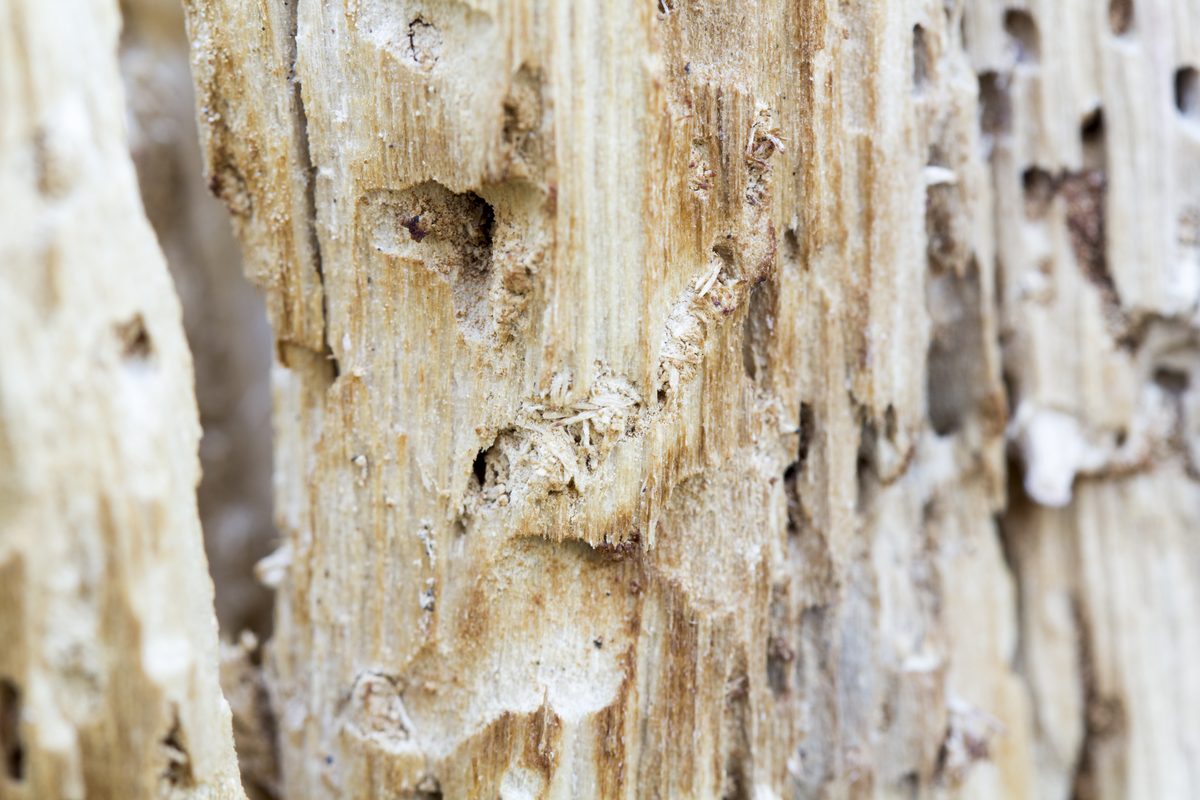
Termites eat wood from the inside, leaving a thin outer shell that still looks intact. Tapping a cabinet stile or a toe kick and hearing a hollow note is one of the earliest usable clues.
Compare sections rather than judging one spot. A run of cabinets should sound consistent, and the panel that sounds different is the one to look at.
Check the lower cabinets first, since they sit closest to the floor structure. Note where the hollow note starts and stops, because that span tells an inspector where to look.
Blistered, Rippled, or Bubbling Cabinet Finish
A cabinet face that bubbles or ripples without a water source nearby is worth a second look. Damage under the veneer distorts the surface above it.
Water damage looks similar, which is why the pattern matters. Moisture damage usually starts at an edge or a joint, while termite damage can appear mid-panel with no path to water.
Press gently on a blistered area. A surface that gives too easily means the material underneath is no longer solid, and a painted finish can bridge a soft spot for longer than a stained one.
Discarded Termite Wings Near Windows and Sills
Swarmers shed their wings after flight, and the wings collect on sills, in corners, and around light fixtures. In a kitchen that often means the window sill above the sink, and finding wings indoors means the swarm happened close by.
Timing helps identify what you are seeing. The LSU AgCenter reports that the Formosan subterranean termite swarm season starts as early as April and runs through June, peaking in early to mid May.
Behavior helps too. Formosan swarmers fly at dusk on warm, humid, windless evenings, while native subterranean termites in Louisiana swarm during the day.
Mud Tubes and Soil Trails Behind the Cabinets
Subterranean termites build narrow mud tubes to travel between soil and wood while staying protected. Those tubes show up on foundation walls, piers, and inside the cabinet cavity where nobody looks.
Pull out the base of a lower cabinet and check the back corners, which are dark, undisturbed, and exactly the kind of route the tubes follow. A flashlight and a phone camera reach further into that cavity than a hand does.
A tube is not proof of active feeding, but it is proof of a path. That finding belongs with a licensed pest-control operator.
Signs Termite Damage Has Gone Past the Cabinet Surface
Once the structure under the finish is affected, the signals change from cosmetic to physical. The three signs below mean the cabinet run needs opening rather than watching.
Cabinet Doors and Drawers That Stop Lining Up
Cabinet boxes rely on square, stable material to hold alignment. When the material behind a hinge or a drawer slide softens, the hardware moves with it.
A door that suddenly sits proud on one corner, or a drawer that binds where it never used to, is worth investigating rather than adjusting. Alignment that drifts across several neighboring doors at once matters more than one door that has always sat slightly off.
Repeated adjustment is the tell. Hardware that will not stay set is usually anchored in something that is no longer solid. Track how often the same hinge needs resetting.
Soft, Crumbling, or Wavy-Looking Wood
Wood damaged by termites can crumble under moderate pressure, and the LSU AgCenter notes that damaged wood often looks wavy and sounds hollow when tapped. It feels wrong before it looks wrong.
Check the back panel, the cabinet floor, and the framing behind the toe kick. Those are the surfaces closest to the structure and the last ones anyone inspects. Empty the cabinet before checking, because a loaded shelf can mask how much the floor of the box has given way.
If a screwdriver enters the wood with little resistance, stop probing. Further disturbance only makes a professional assessment harder.
Termite Damage in the Wall Behind the Cabinets
Sometimes the cabinets are fine and the wall is not. Staining, soft drywall, or a visible tube on the framing means the structure is the problem and the cabinets are incidental.
This is where a remodel conversation and a pest conversation have to happen in the same week. Replacing cabinetry over compromised framing puts new work on an unresolved problem. Sequence matters, because the pest side has to be settled before new boxes go back on that wall.
Our kitchen cabinet work starts with what is behind the boxes, because the wall dictates whether new cabinetry has anything sound to attach to.
Why New Orleans Kitchens Are Especially Exposed to Termite Damage

Local conditions stack in a way that few other cities match. The table below covers the factors that matter most for cabinetry.
| Local Factor | Effect on Cabinets | What Helps |
|---|---|---|
| An established Formosan termite population | Large colonies mean damage can progress faster than expected | Annual inspection by a licensed operator, plus a look behind cabinets during any remodel |
| High year-round humidity | Damp wood is easier to attack and harder to inspect | Ventilated cabinet backs, sealed edges, and a dry sink cabinet |
| Older homes with wood framing close to the ground | A shorter path from soil to the kitchen structure | Keeping toe kicks accessible so the base can be inspected |
| Slow leaks under sinks and dishwashers | A localized damp zone in the least-visible cabinet in the room | Sealed sink-base floors and a leak check written into the remodel scope |
Material choice belongs in the same conversation. At the materials and finishes stage, resistant substrates, sealed edges, and a base detail that can be inspected all reduce how much a future problem can hide.
Protect Your New Orleans Kitchen Cabinets Before the Next Swarm Season
Termites are a structural question that shows up as a cabinet question, and treating it as cosmetic is how small damage becomes a rebuild. Inspect the base cabinets, look behind the boxes during any remodel, and route anything you actually find to a licensed pest-control operator.
At Big Easy Kitchens, we check what is behind a cabinet run before we quote replacing it, and we design the base detail so the next inspection is easy. Call us today to have your cabinets and the structure behind them looked at together.
Frequently Asked Questions
When do termites swarm in New Orleans?
The Formosan subterranean termite swarm season starts as early as April and runs through June, with the peak in early to mid May. Swarmers fly at dusk on warm, humid, windless evenings, which is different from native subterranean termites in Louisiana that swarm during the day.
How do you tell termite damage from water damage in cabinets?
Water damage usually starts at an edge, a joint, or under a fixture and spreads outward from a source you can find. Termite damage can appear mid-panel with no water path and often sounds hollow when tapped. The LSU AgCenter notes that water-damaged wood can look similar but will not sound hollow.
Do termites actually eat kitchen cabinets?
Termites feed on the cellulose in wood and wood-based panels, so cabinet boxes, backs, and framing are all edible to them. Cabinets are rarely the entry point, though. They are usually reached through the wall or floor structure behind them, which is why a cabinet finding points at the framing.
What does termite-damaged wood sound like?
Damaged wood sounds hollow when tapped, because termites feed inside and leave a thin outer shell intact. The most useful test is comparison. Tap along a whole run of cabinets, and the section that sounds different from its neighbors is the one to investigate.
Can new cabinets be made termite resistant?
Cabinets can be built to resist damage and to make it easier to spot, using resistant substrates, sealed edges, and a base detail that can be inspected. No material should be described as termite proof. Resistance reduces risk and buys inspection access, but it does not remove the need for regular professional inspection.
What should you do if you find termite damage in a kitchen?
Stop disturbing the area and contact a licensed pest-control operator for assessment. Probing further spreads debris and makes it harder to judge how far the damage runs. Once the pest side is resolved, the cabinetry and any affected framing can be scoped for repair or replacement.
Do swarmers indoors mean you have an infestation?
Not by itself. Finding swarmers or discarded wings inside means a swarm happened very close to the building, which is a strong reason to have the property inspected. Confirming active feeding inside your walls is a determination for a licensed pest-control operator rather than a homeowner.
Can termite-damaged cabinets be repaired or do they need replacing?
It depends on how much sound material is left and on the condition of the structure behind them. Surface damage on an otherwise solid box can sometimes be repaired, while boxes with soft or crumbling backs and framing usually need replacement once the pest issue has been handled.