
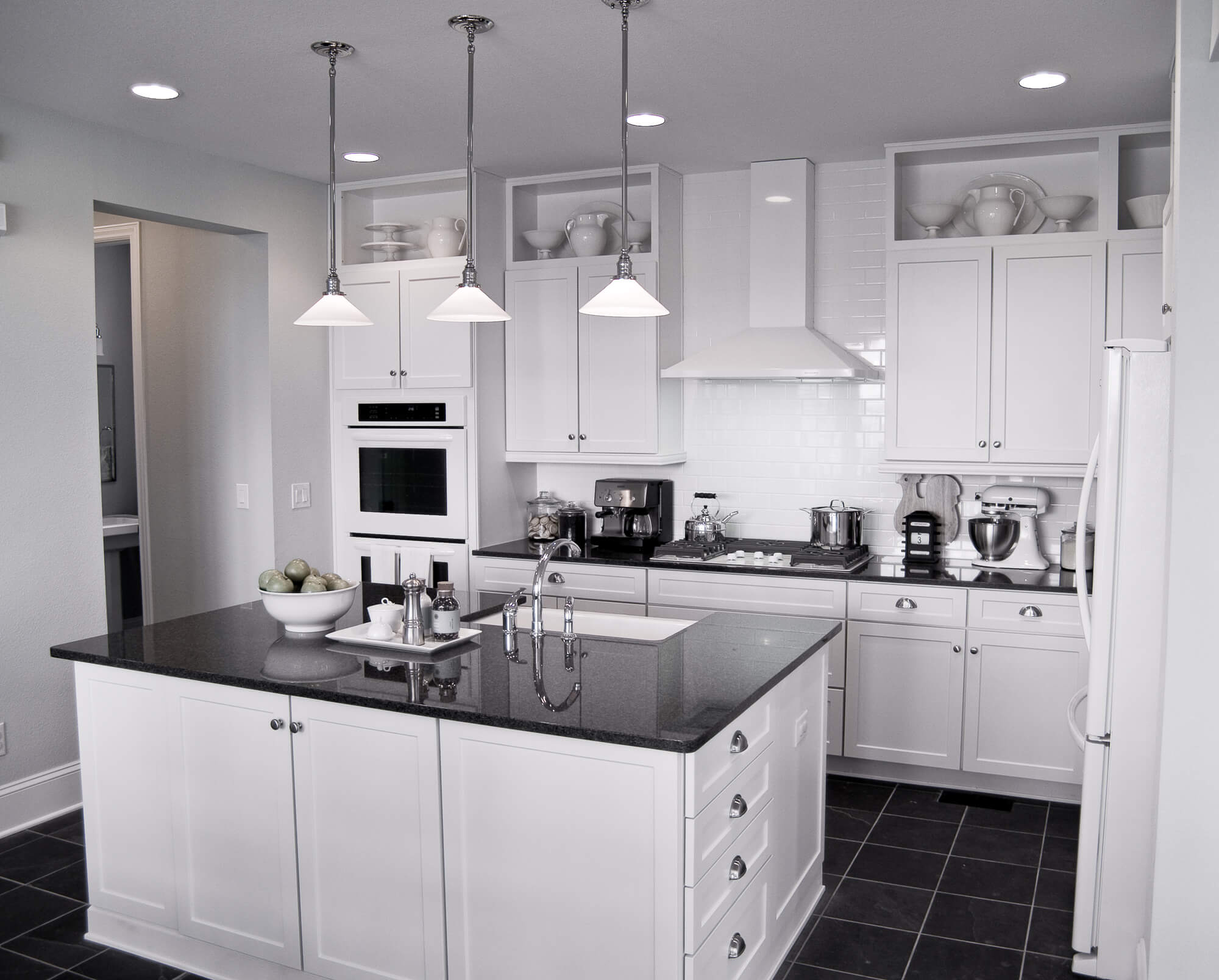
Neither a drop-in nor an undermount kitchen sink is better in every New Orleans kitchen. An undermount sink is easier to keep clean, because crumbs wipe straight off the counter into the bowl, but it needs a countertop that can take a finished cutout edge, such as stone, quartz, or solid surface. A drop-in sink works with almost any countertop, including laminate, and is simpler to replace later, so the countertop usually settles the choice.
At Big Easy Kitchens, we treat the sink as part of the countertop job, because the cutout, the undermount fixing, and the backsplash join are decided together. That is why the drop-in or undermount question deserves an answer before the countertop is templated.
Both styles work well in the right kitchen. The better choice depends on your countertop, how you clean, and how long you expect the sink to stay.
This guide walks through the decision in six steps, then covers the faucet that sits on top. Contact us today to plan the sink and faucet for your remodel.
How Do Drop-In and Undermount Sinks Differ?
The difference between a drop-in and an undermount kitchen sink is where the rim sits. A drop-in sink, also called a top-mount or self-rimming sink, lowers into the cutout from above, and its rim rests on the countertop and carries the weight.
An undermount sink is fastened to the underside of the countertop, so the finished edge of the cutout is exposed and the rim is hidden. Water and crumbs move from counter to bowl with nothing in the way.
That one detail drives everything else. It changes how the sink is cleaned, which countertops can carry it, and how hard it is to replace years from now.
Step 1: Start With Your Countertop
In a New Orleans kitchen remodel, your countertop decides which sink styles are realistic, so start there:
- Stone, quartz, and solid surface can take a finished cutout edge, which is what an undermount sink needs.
- Standard laminate has a core that should not be left exposed around a sink, so it is usually paired with a drop-in.
- Tile and butcher block are usually paired with a drop-in, because a cut tile edge or bare wood at the cutout is hard to keep watertight, so check the countertop maker’s guidance before planning an undermount.
If you are replacing the countertop anyway, both options are open. An undermount sink changes the cutout, the fabrication, and sometimes the material, which is why our countertop remodel work plans the sink and the top as one job.
Step 2: Decide How You Want to Clean
Cleaning is where most homeowners feel the difference every day:
- Undermount: crumbs and spills wipe straight into the bowl. The seam under the countertop edge needs an occasional look, because a failed seal lets water and grime collect underneath.
- Drop-in: the rim sits above the counter, so crumbs catch against it. The caulk line where the rim meets the countertop needs regular cleaning and, over time, recaulking.
In a humid New Orleans kitchen, any seam that holds moisture is worth keeping clean. Neither style is maintenance-free; they simply put the maintenance in different places.
If a clean, uninterrupted counter is a priority, undermount wins on daily use. If you would rather avoid an exposed countertop edge, drop-in is easier to live with.
Step 3: Pick the Sink Material
The sink material affects weight, noise, and how it is mounted:
- Stainless steel is light and works in both styles. The gauge number runs backward, so a lower gauge means thicker steel.
- Composite granite is heavier and quieter than steel and comes in drop-in and undermount versions.
- Fireclay is heavy and often chosen for farmhouse and apron-front designs, which need cabinets built to carry them.
- Enameled cast iron is among the heaviest options, so an undermount installation needs solid support beneath it.
The heavier the sink, the more the mounting matters. An undermount sink hangs from the countertop, so heavy materials need brackets or a support frame rated for the full sink, as the maker’s installation guide specifies.
Step 4: Size the Bowl to the Sink Base
A sink has to fit inside the sink base cabinet beneath it, not only inside the countertop opening:
- Measure the sink base and check the sink’s minimum cabinet size on its specification sheet.
- Choose single or double bowls based on how you wash. A single large bowl fits sheet pans, while a double bowl separates soaking from rinsing.
- Think about depth. A very deep bowl hides dishes but means more bending, especially at the bottom.
Keeping the sink where it already is can also bring the cost of a remodel down, since moving it means moving the plumbing too. That is one of the first questions we settle in small kitchen remodeling projects, where every inch of base cabinet counts.
Step 5: Plan for Replacing the Sink Later
Sinks outlast faucets, but they do not always outlast the countertop. Plan for the day it needs to come out:
- Drop-in sinks lift out from above once the caulk is cut and the clips are released, and a new one only needs to cover the same opening.
- Undermount sinks are fastened beneath the countertop, so replacing one usually means working from inside the sink base and finding a bowl that fits the existing cutout.
- Switching from drop-in to undermount generally only works with a solid countertop and a new or recut opening.
If you expect to keep the countertop for many years, an undermount sink rewards that commitment. If the sink may change before the counter does, drop-in keeps your options open.
Step 6: Match the Faucet to the Sink
The kitchen faucet should be chosen with the sink, not after it:
- Hole count: drop-in sinks often come with predrilled faucet holes, while an undermount sink’s holes are usually drilled into the countertop. Match the faucet, sprayer, and soap dispenser to that count.
- Spout height and reach: the stream should land near the center of the bowl and clear your tallest pot.
- Flow rate: federal standards cap kitchen faucets at 2.2 gallons per minute at 60 psi.
- Lead-free certification: the EPA defines lead free as a weighted average of 0.25% lead across the surfaces that touch water.
A pull-down sprayer suits a single large bowl, while a separate side sprayer needs its own hole.
Plan the Sink and Faucet With Your Countertop
An undermount sink is easier to clean and a drop-in sink is easier to fit and replace, so the right answer usually comes down to the countertop beneath it. Settle the sink, the faucet, and the countertop together and the cutout only has to be made once.
At Big Easy Kitchens, we template and fit the countertop ourselves, and our own licensed plumber reconnects the sink and faucet. Call us today to plan the sink and faucet for your New Orleans kitchen.
Frequently Asked Questions
What should I look for when buying a kitchen sink?
Start with the countertop it will sit in, then choose a mounting style, material, and size that fit the sink base cabinet. Check the bowl depth, the number of faucet holes, and the drain position. A sink that suits your countertop and how you cook will serve you better than one chosen on looks alone.
What factors should I consider when choosing a kitchen sink faucet?
Match the faucet to the number of holes in your sink or countertop, then check spout height and reach so water lands near the center of the bowl. Consider a pull-down sprayer, the finish, and lead-free certification. Federal standards cap kitchen faucet flow at 2.2 gallons per minute at 60 psi.
Can you put an undermount sink in a laminate countertop?
Usually not with standard laminate, because its core should not be left exposed around a sink and is damaged by water. Drop-in sinks are the common pairing for laminate. Some specialty laminate systems are made for undermount sinks, so ask the countertop maker before ruling it out.
Do undermount sinks leak?
The sink itself does not usually leak, but the seal between the bowl and the countertop can fail over time. When it does, water and grime can collect along the hidden edge. Checking the seam from inside the sink base and resealing it when needed keeps an undermount sink watertight.
Is a drop-in sink easier to install?
Generally, yes. A drop-in sink lowers into the cutout from above and is held by its own rim and clips, so it needs less fabrication and support work than an undermount sink. It also suits countertops that cannot take a finished cutout edge, which is why it is common in laminate kitchens.
What gauge stainless steel sink is best?
Lower gauge numbers mean thicker steel, and 16 and 18 gauge are common choices for kitchen sinks. Thicker steel dents less and tends to be quieter, especially with sound-deadening pads underneath. Compare the gauge alongside the bowl depth and the finish rather than on its own.
Can you replace a drop-in sink with an undermount?
Sometimes, but it usually means more than swapping the sink. The countertop must be a material that can take a finished cutout edge, and the existing opening, sized for a rim, is often too large for an undermount bowl. In many kitchens the change happens when the countertop is replaced.
What is the maximum flow rate for a kitchen faucet?
Federal standards cap new kitchen faucets at 2.2 gallons per minute at 60 psi. Some state and local codes set lower limits, and many faucets are sold below the federal maximum. Check the flow rate printed on the specification sheet when comparing models, especially if water use matters to you.